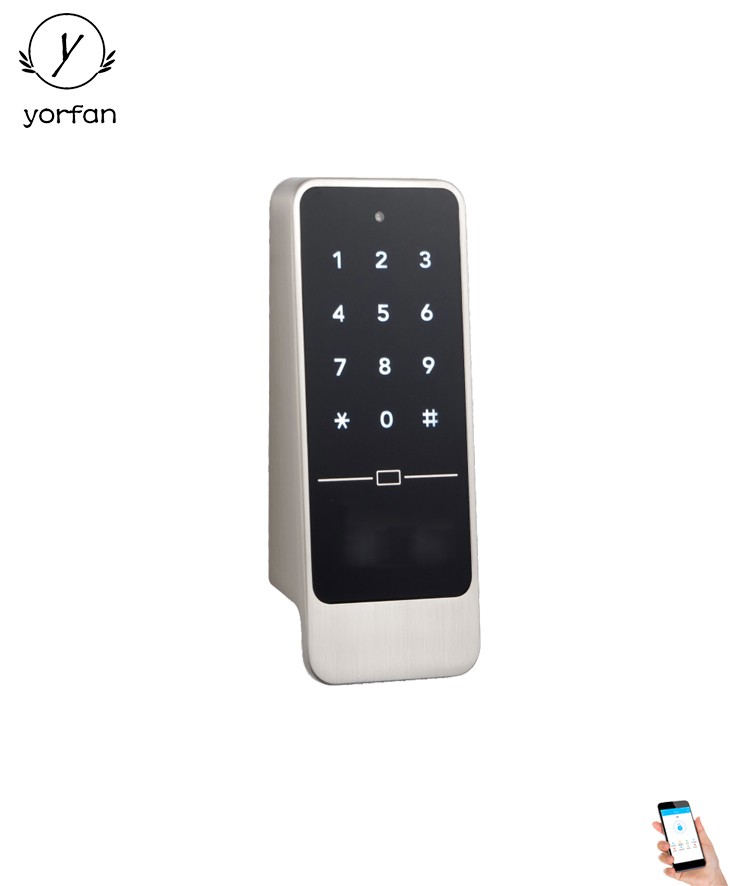
How a Leading Cabinet Lock Manufacturer Tests for Cycle Life
Nov. 16, 2026
This article provides a comprehensive exploration of how Yorfan Technology Co., Ltd., a leading cabinet lock manufacturer, tests its products for cycle life. It begins by highlighting the critical role of cycle life testing in ensuring the reliability and security of cabinet locks, which are often subjected to thousands of operations. The article introduces Yorfan Technology as a professional enterprise focused on smart lock solutions, with a diverse product line spanning residential smart locks, hotel locks, office access control locks, and locker locks. It emphasizes Yorfan's commitment to high-quality standards and user-oriented concepts. The discussion then details the standards and benchmarks for cycle life, such as ANSI/BHMA and EN 1300, and explains how Yorfan often exceeds typical thresholds, targeting 100,000 to 200,000 cycles. The testing process is broken down into stages: sample preparation, automated cycling equipment, and environmental factors like temperature, humidity, dust, and voltage fluctuations. Mechanical testing covers latch/bolt operation, handle/knob cycling, key/keypad cycling, and motorized mechanisms. Electronic and smart component testing includes fingerprint sensors, RFID/BT modules, battery management, and auto-lock/child safety features. The article also reveals how data collection and failure analysis drive design improvements, and how production cycle testing ensures consistent quality. A case study of a heavy-duty locker lock illustrates the iterative design changes needed to pass a 200,000-cycle test. Continuous improvement and future trends, such as accelerated life testing and IoT integration, are also discussed. Overall, the article demonstrates that Yorfan's cycle life testing is a rigorous, data-driven process that not only validates product durability but also enhances innovation and customer satisfaction.
In the realm of security hardware, cabinet locks are often the unsung heroes of safety and organization. From office lockers to residential storage, these compact mechanisms provide crucial protection for valuables, documents, and personal belongings. Yet, the reliability of a cabinet lock hinges on one critical factor: its ability to withstand repeated use over time. This is where cycle life testing comes into play. Yorfan Technology Co., Ltd, a professional enterprise focusing on sales of smart lock solutions, has established itself as a leading manufacturer in this domain, and its approach to cycle life testing is both rigorous and innovative.
Yorfan Technology is committed to integrating innovative technology with home and commercial security, providing secure, convenient, and intelligent access control products for global users. With a product portfolio that spans residential smart locks, hotel locks, office access control locks, locker locks, and supporting smart security devices, the company adheres to high-quality standards and user-oriented concepts. This article delves deep into how Yorfan Technology tests its cabinet locks for cycle life, ensuring that every product delivers durable, stable, and secure performance.
The Importance of Cycle Life Testing
Cycle life testing is a process that simulates the repeated operation of a lock over its expected lifespan. The goal is to identify potential failures, wear patterns, and degradation in performance before products reach the market. For cabinet locks, which may be opened and closed thousands of times in environments like gyms, schools, offices, or industrial facilities, cycle life is a direct indicator of reliability and customer satisfaction.
As Yorfan Technology develops smart cabinet locks—featuring keyless unlocking options such as RFID, passwords, fingerprints, Bluetooth, and app remote control—the complexity of the mechanisms increases. Unlike traditional mechanical locks, these smart devices integrate electronic components, motors, sensors, and communication modules, each of which must be tested for endurance. Without comprehensive cycle life testing, even the most advanced smart lock could fail prematurely, leading to security vulnerabilities and dissatisfied users.
For Yorfan Technology, cycle life testing is not merely a quality assurance step but a fundamental design driver. It informs material selection, mechanical tolerances, electronic component ratings, and software algorithms. By pushing locks to their limits in a controlled environment, Yorfan engineers gain invaluable insights that enable them to refine product designs and manufacturing processes.
Yorfan Technology: A Closer Look
To understand Yorfan's testing methodology, it is essential to grasp the company's philosophy and product diversity. Founded with the mission to deliver reliable smart security solutions, Yorfan Technology Co., Ltd has grown into a dynamic manufacturer that caters to diverse security needs. The company's product lines include household smart locks, cabinet locks, drawer locks, hotel locks, and commercial access control systems. This comprehensive range necessitates a versatile testing framework that can accommodate various form factors, locking mechanisms, and technological features.
Yorfan's commitment to high-quality standards is evident in its standardized production and multi-round product testing. The company implements rigorous quality control measures at every stage, from incoming raw materials to final assembly. Cycle life testing is a cornerstone of these efforts, ensuring that each lock not only works on day one but continues to function flawlessly after years of use.
Incorporating advanced anti-theft technology, stable smart connections, and minimalist design, Yorfan's products are engineered to meet the evolving needs of safe living and efficient management. The company also offers customization services, allowing clients to tailor locks to specific applications. This flexibility means that cycle life tests must be adaptable to different configurations and usage scenarios.
Standards and Benchmarks for Cycle Life
Cycle life testing for cabinet locks is guided by industry standards that define minimum performance thresholds. International standards, such as ANSI/BHMA A156.11 for cabinet locks and European EN 1300 for high-security locks, provide guidelines for cycle endurance. However, leading manufacturers like Yorfan often exceed these minimums to ensure superior reliability.
Typically, a cabinet lock is expected to withstand anywhere from 50,000 to 100,000 cycles, depending on its application. For example, a locker lock in a school might be operated multiple times per day, leading to tens of thousands of cycles per year. Yorfan Technology tests its cabinet locks to at least 100,000 cycles, with some products targeting 200,000 cycles to ensure long service life under heavy usage. This proactive approach aligns with the company's emphasis on durable and stable performance.
To validate against these benchmarks, Yorfan has established state-of-the-art testing facilities equipped with automated cycling machines, environmental chambers, and precision measurement tools. The testing process is meticulously documented, providing traceable evidence of product endurance.
The Testing Process: From Prototype to Production
Cycle life testing at Yorfan Technology begins with design validation and continues through production quality control. The process is divided into several stages, each with specific objectives and procedures.
Sample Preparation and Conditioning
Before testing begins, lock samples are prepared to reflect real-world conditions. This includes assembling the lock with production-representative parts and applying any necessary lubrication, as specified in the design. For smart locks, firmware is updated to the latest version, and batteries are charged to full capacity. Samples are then conditioned in a controlled environment, typically at room temperature and standard humidity, for at least 24 hours to ensure stable initial performance.
This preparation is crucial because the performance of materials and electronics can vary with temperature and humidity. By starting with a consistent baseline, Yorfan engineers can accurately measure the effects of cycling without interference from environmental variables.
Automated Cycling Equipment
Yorfan's test laboratories are equipped with custom-built and commercially available automatic cycling machines. These machines simulate the actions of a user operating the lock, including inserting a key, turning a knob/lever, pressing a keypad button, or scanning a fingerprint. For smart locks with motorized locking mechanisms, the machine triggers the motor via the same signals used in normal operation.
Each cycling station is calibrated to apply the correct torque, force, and speed. For example, a cabinet lock's latch bolt must fully extend and retract with each cycle, and the handle, if present, must be rotated through its full range. The machines count cycles and automatically pause if a failure occurs, allowing engineers to inspect and diagnose the issue.
Yorfan's cycling machines are designed to handle multiple samples simultaneously, increasing testing throughput and statistical significance. This allows the company to test multiple configurations and identify design weaknesses early in the development cycle.
Test Conditions and Environmental Factors
While many cycle life tests are conducted at ambient conditions, Yorfan also subjects locks to extreme environmental conditions to accelerate wear and uncover potential failures. These tests include:
Temperature Cycling: Locks are placed in environmental chambers that cycle temperatures from -20°C to +60°C, reflecting harsh indoor and outdoor environments. Repeated expansion and contraction of materials can affect tolerances and seals.
Humidity Exposure: High humidity (up to 95%) is applied to test corrosion resistance and the integrity of electronic components. This is particularly relevant for coastal or tropical regions.
Dust and Particle Exposure: To simulate dusty environments, locks are subjected to fine particulate matter that may enter the keyhole or moving parts, testing the effectiveness of seals and wipers.
Voltage Fluctuations: For smart locks, power supply variations are simulated to ensure consistent performance. Low battery conditions are also tested to see how the lock behaves as the battery depletes.
By testing under these extreme conditions, Yorfan can ensure that its cabinet locks maintain their cycle life performance in the real world, regardless of where they are installed.
Mechanical Cycle Life Testing
The core of cabinet lock testing lies in the mechanical operation. Yorfan Technology conducts several types of mechanical cycle tests to evaluate every moving part.
Latch and Bolt Operation
One of the most fundamental tests involves cycling the latch or bolt. The test fixture repeatedly extends and retracts the bolt, as would occur during locking and unlocking. For a cabinet lock, this may be achieved by turning a thumb turn, rotating a key, or activating a motorized mechanism. The force required to operate the bolt is monitored, and any increase beyond a baseline threshold indicates wear or misalignment.
The contact surfaces of the latch and the strike plate are prone to friction and impact damage. Yorfan engineers use precise force sensors and linear encoders to measure the smoothness of motion. Over thousands of cycles, material properties such as hardness and surface finish are evaluated. Typically, a cabinet lock should maintain its latching force within 20% of the original value after 100,000 cycles.
Handle and Knob Operation
Many cabinet locks incorporate handles or knobs for user convenience. These components are subjected to cyclic rotation and pulling in the same way a user would operate them. The test machine applies a specified torque (e.g., 1.5 Nm) over a defined angle, repeating the motion thousands of times. Yorfan checks for spring fatigue, loosening of fasteners, and wear on the handle's coupling mechanism.
For locks with lever handles, a vertical load test is also performed to ensure the lever does not sag under force, which could affect aesthetics and user interaction.
Key and Keypad Cycling
For mechanical key locks, Yorfan tests the key insertion and rotation cycle. A robot arm inserts the key into the cylinder, rotates it 90 degrees, and then retracts it. This is repeated for each cycle. The key cylinder is the most vulnerable part of a mechanical lock, so maintaining smooth key operation is critical. Yorfan measures the insertion and turn torques, and after cycling, the lock should still accept the key with minimal effort.
For electronic locks with keypads, Yorfan simulates thousands of key presses on each button. The keypad material must resist wear and maintain tactile feedback. The test uses a pneumatically driven pusher that activates the appropriate button, and the latency of the electrical signal is monitored.
Motorized Locking Mechanisms
Smart cabinet locks often feature motorized bolts or latches. These mechanisms are tested for cycle life by actuating the motor continuously. The motor runs to lock and unlock the bolt, and Yorfan monitors parameters such as current draw, time to lock/unlock, and end-of-stroke position. Over time, gear wear and motor degradation can lead to slower operation or failure to engage.
Yorfan's cycle test for motorized locks includes a low battery scenario, where the motor is powered at the minimum voltage specified for the lock. This ensures that even with a depleted battery, the lock can still perform a sufficient number of cycles to alert the user and remain functional.
Electronic and Smart Component Testing
With the advent of smart locks, cycle life testing extends beyond mechanical parts to encompass electronics, firmware, and connectivity. Yorfan Technology integrates these elements into its testing regime to ensure comprehensive reliability.
Biometric Sensors (Fingerprint)
Fingerprint sensors are increasingly common in cabinet locks. These sensors must continue to accurately read fingerprints even after repeated contact and exposure to dirt and moisture. Yorfan tests fingerprint sensors by placing a silicone artificial finger with a simulated fingerprint on the sensor for each cycle. The sensor's recognition accuracy and response time are logged. After a set number of cycles (e.g., 50,000), the sensor should still have a false rejection rate within acceptable limits.
The surface of the sensor is vulnerable to scratching and peeling. Yorfan also performs abrasion tests to evaluate the durability of the sensor's protective coating. A specialist machine rubs the sensor with a standardized abrasive material for a specified number of cycles, then the sensor's optical clarity and recognition performance are reassessed.
RFID and Bluetooth Modules
Contactless unlocking via RFID cards or Bluetooth smartphone apps is a key convenience feature. Yorfan tests the communication modules by continuously sending unlock commands. For RFID, a test fixture places an RFID card near the sensor and then removes it, repeating the cycle. The lock's reading range and response time are monitored. For Bluetooth, a mock smartphone sends connection and unlock requests at intervals, simulating real usage patterns.
The electromagnetic compatibility of these modules under cycling is also checked. After exposure to endurance cycling, the modules must not exhibit degraded signal strength or increased latency.
Batteries and Power Management
Battery life is a critical aspect of smart cabinet locks. Yorfan's cycle life testing includes battery discharge and recharging cycles, if applicable. For battery-powered locks, the test monitors the voltage and current profile during each locking/unlocking operation. The low power reminder function is tested by allowing the battery to drain to near threshold and verifying that the lock sends the appropriate warning to the user via LED or app notification.
The locking mechanism must operate reliably even when the battery is at the low voltage limit. Yorfan ensures that the motor can still drive the bolt with minimal power, and that the lock's electronics do not reset or misbehave due to undervoltage. In tests where the battery is fully drained, the lock should revert to a safe state and allow an emergency power supply (e.g., a USB connection) to restore functionality.
Auto-Lock and Child Safety Features
Yorfan's cabinet locks often include auto-locking after closure, a feature that ensures security without manual action. This feature is tested by simulating the door closing and verifying that the bolt engages automatically. The cycling machine closes the door, and the lock is expected to latch automatically. The force required to close the door is measured to ensure it is not too high for ease of use, and the bolt is fully engaged with each cycle.
For child safety, the lock must prevent accidental locking from the inside. This is tested by performing a series of specific manipulations that a child might attempt, such as pressing random buttons or turning the thumb turn in a certain sequence. The lock should remain in an unlocked state or provide an escape release mechanism. These tests are repeated across many cycles to ensure the safety feature does not wear out over time.
Data Collection and Failure Analysis
Cycle life testing generates vast amounts of data. Yorfan Technology uses sophisticated data acquisition systems to record every parameter during the test, including:
Torque and force measurements for mechanical operations.
Current draw and voltage of motors and electronics.
Response times for unlocking commands.
Number of cycles completed at any given time.
Environmental conditions (temperature, humidity) during the test.
Any error codes or anomalies produced by the lock's software.
This data is continuously analyzed in real time. If a parameter exceeds a predefined threshold, the test is paused automatically, and engineers are alerted. This early warning allows them to stop the test, inspect the lock, and identify the root cause of any degradation.
Failure analysis is a meticulous process. When a lock fails, it is disassembled, and each component is examined under microscopes. Wear particles are collected and analyzed using spectroscopy to determine the type and severity of wear. Stress fractures, deformation, and corrosion are documented.
Engineers then correlate the failure mode with the cycle data to understand the sequence leading to failure. For example, if a motor starts drawing more current after 20,000 cycles, it might indicate increasing friction in the gear train. By examining the gears, they may find that the gear teeth are wearing and generating debris. This finding could lead to a design change, such as using a harder gear material or improving lubrication.
Yorfan's failure analysis closes the feedback loop between testing and design, ensuring that every product generation is more robust than the previous one.
Quality Control in Production
Cycle life testing is not only performed on prototypes; Yorfan also conducts sampling tests on production lots to ensure consistent quality. According to industry practice, a certain percentage of locks from each batch are randomly selected and subjected to a shortened cycle test, typically 10,000 cycles, to detect any manufacturing issues.
These production validation tests are integrated into the assembly line. Each lock goes through a final functional test, which includes a few cycling operations. But the sampled locks undergo more rigorous endurance testing. If a sample lock fails, the entire batch is quarantined and inspected. This stringent approach reflects Yorfan's commitment to delivering high-cost-effective products with long service life.
The data from production cycle testing is also used for statistical process control. Trends in torque or response time are monitored to identify potential drift in manufacturing parameters. By addressing these trends early, Yorfan prevents problems from affecting a larger number of products.
Incorporating Smart Features into Cycle Life Testing
What sets Yorfan apart is its ability to test complex smart locks that combine mechanical, electronic, and software components. The company's expertise allows it to simulate the full user journey in a laboratory setting.
Smart Access Management Testing
Yorfan's smart locks support temporary passwords and access records checking. These features are tested for endurance by repeatedly assigning and revoking temporary passcodes, as well as querying the access log. The lock's memory and processing unit must handle thousands of transactions without errors. The cycle test involves sending a large number of commands via the app interface to simulate many months of usage. The response time of the lock must remain consistent, and there should be no data corruption.
In addition, the lock's ability to manage up to a certain number of users (e.g., 100) is tested by creating and deleting user profiles in a cyclic manner. This ensures that the lock's memory management does not degrade.
Virtual Password and Anti-Pry Protection
Security features like virtual password (where users can enter random digits before the real password) and wrong-code automatic locking are designed to deter unauthorized access. Yorfan tests these features by cycling the keypad operations with many invalid entries, then confirming that the lock still works correctly after a lockout period.
The anti-pry and anti-violence damage protections are evaluated through physical attacks in a separate test, but cycle life testing also considers those scenarios. For example, after a series of forced entry attempts (which are not part of cycle testing), the lock should still be able to perform normal cycles. The lock's structural integrity is tested by applying excessive force to the handle or latch for a limited number of times, and then the lock is subjected to a full cycle test to see if it remains operational.
This holistic approach ensures that the lock's security features do not wear out after normal use, and that the lock remains resilient even after abuse.
Connectivity and App Integration
Yorfan's locks can be operated via a smartphone app. The cycle testing includes continuous reconnection and disconnection of the Bluetooth/Wi-Fi module, as well as sending unlock commands through the app thousands of times. The lock's software must achieve a certain success rate for command execution, and the state update (locked/unlocked) must be accurately reported to the app.
Firmware updates are also part of the testing scenario. Yorfan simulates the process of upgrading the lock's firmware via the app, then runs a series of cycles to confirm that the update did not introduce regressions. This is crucial for long-term maintainability.
Case Study: Yorfan's 200,000-Cycle Test for a High-Security Cabinet Lock
To illustrate Yorfan's testing rigor, consider the development of a heavy-duty locker lock designed for use in fitness centers and educational institutions. The lock features Bluetooth and RFID unlocking, a motorized deadbolt, and a fingerprint sensor. Yorfan's engineering team set a target of 200,000 cycles without critical failure.
During initial prototypes, the motor gearbox failed at around 70,000 cycles due to excessive wear on the first gear. The failure analysis revealed that the gear was made of POM with a hardness that was insufficient for the torque. The team redesigned the gear train with a helically cut steel pinion and a POM gear with proper reinforcement, and used a proprietary high-tech grease. With this change, the motorization passed 150,000 cycles before the grease began to degrade, prompting a switch to a synthetic grease with a longer lifespan.
Meanwhile, the fingerprint sensor began to exhibit a higher false rejection rate after 90,000 cycles due to a slight wear of the sensor surface. Yorfan collaborated with the sensor manufacturer to apply a diamond-like carbon (DLC) coating, which extended the sensor's surface durability to well over 200,000 cycles.
The lock's keypad, made of injection-molded rubber, was initially sensitive to repeated pressing; the lettering began to fade after 50,000 cycles. By switching to a laser-etched keypad with a double-shot molding process, the legend remained legible for 200,000 cycles.
The final product passed the 200,000-cycle test, and the test data was documented in the product's extensive technical dossier. This case demonstrates how cycle life testing directly influences materials selection and design enhancements, ultimately benefiting the end-user with a lock that lasts for decades.
Continuous Improvement and Future Trends
Yorfan Technology is not satisfied with meeting current standards; it continuously looks for ways to improve its cycle life testing methodologies. The company invests in research and development to understand how new materials, such as advanced engineering plastics and ceramics, can reduce wear. Additionally, the integration of Internet of Things (IoT) sensors directly into locks allows for remote condition monitoring, but this also presents new challenges for cycle testing: the sensors themselves must be durable and their data accurate over many cycles.
Yorfan is exploring accelerated life testing methods, such as increased cycling frequency to reduce test time without compromising accuracy. By using statistical models, the company can predict long-term performance from shorter tests, accelerating the time to market for new products.
Moreover, with the rise of smart homes, cabinet locks are being integrated into broader security ecosystems. Yorfan tests interoperability with various smart home platforms, ensuring that cycle life is not compromised by external software updates. The company participates in industry consortia to help shape future testing standards, promoting higher reliability across the entire security industry.
Conclusion
Cycle life testing is the backbone of product reliability for Yorfan Technology Co., Ltd. For a leading cabinet lock manufacturer, ensuring that every lock can withstand the test of time is paramount. Through meticulous mechanical and electronic testing, Yorfan validates that its smart locks maintain their security features, convenience, and performance over hundreds of thousands of operations. The company's commitment to excellence is reflected in its standardized production, multi-round testing, and continuous improvement culture.
To consumers, this translates into peace of mind. Whether it's a hotel room locker, an office filing cabinet, or a residential storage locker, a Yorfan lock is a testament to durability and security. The company's user-oriented concepts and advanced anti-theft technology are not just marketing claims; they are proven through rigorous cycle life testing.
As Yorfan Technology looks to the future, it remains dedicated to building safer, smarter living experiences for every user. By investing in test facilities, embracing international standards, and incorporating cutting-edge smart features into its products, Yorfan sets the gold standard for cycle life assurance in the cabinet lock industry.
For more information on Yorfan's innovative lock solutions, including keyless convenience, high-security protection, and smart access management, visit Yorfan Technology Co., Ltd.