How a Bluetooth Lock Factory Implements Final Functionality Checks
Oct. 15, 2026
Yorfan Technology Co., Ltd, a professional smart lock manufacturer, implements comprehensive final functionality checks to ensure every Bluetooth lock meets high standards. The process begins with visual inspection and mechanical integrity tests, including anti-pry, ante-pick, and wrong-entry limit verification. Bluetooth connectivity is tested for range, stability, and interference resilience. Authentication methods—RFID, password, fingerprint, and app—are individually validated, with a focus on features like virtual passwords and temporary access codes. Battery life and low-power warnings are verified using simulated usage patterns. Security tests involve physical attacks, digital spoofing, and relay attack simulations to ensure anti-theft protection. App integration and firmware updates are thoroughly checked, followed by environmental stress tests for temperature, humidity, and dust resistance. The factory uses automated test stands, machine vision, and statistical process control to enhance accuracy and traceability. Technicians receive rigorous training, and continuous improvement is driven by customer feedback and post-market surveillance. Yorfan Technology's products, including Bluetooth locks for cabinets, lockers, and hotel rooms, are equipped with keyless convenience, high security, smart management, long battery life, and easy installation. The company's commitment to quality, customization, and after-sales support solidifies its reputation as a reliable provider of smart security solutions.
In the fast-paced world of smart security, a Bluetooth lock factory stands as a bastion of reliability and precision. Yorfan Technology Co., Ltd, a professional enterprise focusing on sales of smart lock solutions, has consistently demonstrated that the true hallmark of excellence lies in meticulous final functionality checks. These checks are not merely a box-ticking exercise; they are the definitive barrier between a product that merely functions and one that excels in the hands of global users. This article delves deep into the sophisticated processes, rigorous standards, and innovative methodologies that Yorfan Technology employs to ensure every Bluetooth lock leaving its facility is nothing short of perfect.
The Crucial Role of Final Functionality Checks
In the competitive landscape of smart locks, the final functionality check is a comprehensive evaluation designed to validate that each unit meets its specified performance criteria. It simulates real-world usage scenarios to uncover any latent defects that may have escaped earlier production stages. For a Bluetooth lock, this involves verifying wireless connectivity, unlocking mechanisms, security protocols, and power management. At Yorfan Technology, this stage is treated with the utmost seriousness. Every lock is treated as if it were destined for a high-security installation, reflecting the company's commitment to building a safer, smarter living experience for every user.
The importance of these checks cannot be overstated. A single faulty lock can tarnish a brand's reputation and compromise user safety. Therefore, the factory adheres to high-quality standards and user-oriented concepts, ensuring that each product line—from residential smart locks to hotel locks, office access control locks, locker locks, and supporting smart security devices—undergoes the same exhaustive scrutiny. The company's dedication to integrating innovative technology with home and commercial security is exemplified in these final moments of production.
Pre-Check Preparations: Setting the Stage for Excellence
Before a Bluetooth lock enters the final functionality check station, it must first pass through a series of preparatory steps. These steps ensure that the device is in a baseline state, free from external interference and ready for thorough testing. The factory floor at Yorfan Technology is a symphony of efficiency, with each station meticulously arranged to facilitate a seamless flow of units. Technicians, garbed in anti-static gear, retrieve locks from the assembly line and visually inspect them for any cosmetic imperfections, loose components, or misalignments. This preliminary visual inspection is crucial, as it catches issues that could be amplified during functional testing.
Upon passing the visual stage, each lock is assigned a unique identifier, usually a serial number, which is logged into a centralized database. This digital trail allows engineers to trace every test result back to the specific unit, ensuring full accountability. The locks are then placed in designated test fixtures that mimic typical mounting surfaces—wooden doors, metal cabinets, or glass panels—depending on the intended application. Yorfan Technology's broad product range includes cabinet locks, drawer locks, wardrobe locks, and more, so test fixtures are versatile and adjustable to accommodate various form factors. This attention to detail reflects the company's wide range of products for option, ensuring that no matter what kind of lock you need—RFID hotel lock, Bluetooth lock, WiFi lock, locker lock, access control units, hotel DND—there is a reliable and stable solution available.
The Anatomy of a Final Functionality Check
The final functionality check at Yorfan Technology is a multi-tiered process, each tier designed to evaluate a specific aspect of the lock's performance. The process is broken down into discrete stations, each staffed by highly trained technicians and equipped with state-of-the-art testing apparatus. The following sections detail each station, providing a comprehensive overview of what transpires.
Station 1: Physical and Mechanical Integrity Testing
The first line of defense is the physical and mechanical integrity test. This station focuses on the structural robustness of the lock, ensuring it can withstand the rigors of daily use and potential tampering. Technicians begin by applying controlled torque to the lock's exterior components, such as the handle, thumb turn, and keypad, to verify that they are securely attached. The lock is then subjected to a series of compression and tension tests, simulating forces that might be encountered during an attempted forced entry.
For products equipped with an anti-pry and anti-pick design, this is where those features are put to the test. Specialized tools, including pick sets and pry bars, are used in a controlled environment to attempt bypassing the lock. The lock must resist these attempts for a minimum duration without any sign of compromise. Additionally, the test includes a wrong entry limit and automatic locking function check. The technician inputs multiple incorrect passwords or fingerprints to verify that the lock enters a temporary lockout mode after the predetermined number of attempts. This functionality is vital for preventing unauthorized access, as mentioned in Yorfan Technology's product descriptions.
To further verify durability, the lock undergoes an endurance test where it is continuously cycled through locking and unlocking sequences. A mechanical arm repeats this process thousands of times, simulating years of usage. At the end of the cycle, the lock must show no signs of mechanical wear or degradation in performance. This test is particularly stringent for products like cabinet locks and drawer locks, which experience frequent opening and closing. The entire process is monitored by sensors that record any anomalies, ensuring that every lock behaves consistently.
Station 2: Wireless Connectivity and Bluetooth Range Testing
The core of any Bluetooth lock lies in its wireless connectivity. At Yorfan Technology, a dedicated chamber is equipped with RF-shielding materials to minimize external interference. Here, each lock is paired with a standard smartphone running the proprietary Yorfan app. The testing procedure begins with a Bluetooth scanning test, where the lock's advertising signal must be detected within a specified radius. The factory typically sets a conservative range of 10 to 15 meters in open air, though real-world performance may vary.
Once paired, the technician initiates a series of communication tests, sending commands to lock, unlock, and query status. The response time is measured meticulously; a high-quality lock should respond within milliseconds. The test also evaluates the stability of the connection, performing a stress test by rapidly sending multiple commands. Any dropped connections or delayed acknowledgments are flagged, and the lock is sent for further inspection. The app remote unlocking capability is a key feature for Yorfan Technology, enabling users to control their locks from anywhere via the app, so this test is paramount.
In addition to range and stability, the test checks for interference resilience. The lock is subjected to various RF signals from common household devices, such as Wi-Fi routers and microwave ovens, to ensure that the Bluetooth connection remains robust. This is particularly important in modern homes where multiple wireless devices coexist. The factory's advanced testing equipment can simulate these environments, guaranteeing that the lock's smart connection remains stable.
Station 3: Authentication and Unlocking Mechanism Validation
Bluetooth locks offer multiple unlocking methods, including RFID, password, fingerprint, Bluetooth, and app remote unlocking. Each method must be tested individually to ensure flawless operation. Yorfan Technology's product lines support keyless convenience, emphasizing the need for absolute reliability.
For RFID unlocking, the technician presents a series of authorized cards and fobs against the lock's reader. The lock must recognize each credential instantly and unlock without hesitation. The test also includes unauthorized RFID tags to verify that they are rejected. This is part of the high security protection promised by Yorfan Technology.
Password and keypad testing is more comprehensive. The technician enters a preconfigured user code, ensuring that each keystroke registers accurately. They also test virtual password functionality, where a user can enter a long random sequence that contains the actual password, preventing shoulder-surfing. The lock must correctly extract the password from the string. Additionally, the system verifies that wrong entry limit and automatic locking prevent unauthorized access, as described in the product highlights. Temporary passwords and one-time passwords are generated through the app and tested to confirm they operate within their expiration windows. All these features—temporary passcode, one-time password, and access records—are essential for smart access management.
Fingerprint recognition testing is perhaps the most intricate. The factory uses synthetic fingerprint models that mimic real human fingerprints with varying ridge patterns, moisture levels, and pressure. The lock's sensor must accurately identify the registered print and reject unregistered ones. The testing process also evaluates the sensor's speed and accuracy under different conditions, such as dirty or slightly worn fingers. Yorfan Technology's high security protection is underscored by these rigorous biometric tests.
Finally, Bluetooth and app unlocking are tested in conjunction with the wireless range station. The technician uses the app to send an unlock command, and the lock must respond correctly. They also verify that the app provides real-time access records, allowing users to check entry logs. This smart management functionality is a cornerstone of Yorfan Technology's user experience.
Station 4: Battery and Power Management Verification
Power consumption is a critical factor for Bluetooth locks, as they are typically battery-operated and must last for months or even years on a single set of batteries. Yorfan Technology's products are designed with long battery life and low power reminder systems, so this station is crucial. The technician installs a fresh set of batteries and measures the standby current draw, which should be in the microamp range. They then simulate various usage patterns—frequent unlocking, status checks, and Bluetooth advertising—to ensure the lock's power consumption remains within acceptable limits.
The low battery alarm functionality is also tested. The technician monitors the battery voltage using a programmable power supply to simulate a declining battery. When the voltage drops below a predetermined threshold, the lock must trigger a low battery warning, both via an audible beep and a notification in the app. The warning should appear at a level that gives the user ample time to replace the batteries, preventing unexpected lockouts. Yorfan Technology's low energy consumption design with long standby time and low battery alarm reminds timely charging or battery replacement is here verified.
Some locks come with an emergency power supply port, such as a micro-USB connector, allowing users to power the lock temporarily if the batteries are completely drained. This feature is tested by connecting a portable charger to the lock, which should then have sufficient power to perform an unlocking sequence. The emergency power mechanism is essential for ensuring that users are never locked out, adding to the product's convenience.
Station 5: Security and Anti-Theft Feature Validation
Security is paramount in the smart lock industry. Yorfan Technology has implemented multiple anti-theft designs, including anti-pry, anti-violence damage, virtual password, wrong code automatic locking, and more. This station subjects the lock to a battery of malicious attacks, both physical and digital, to ensure that it remains impenetrable.
Physical attacks include attempts with screwdrivers, hammers, and drill bits. The lock's housing must resist these tools without breaking or revealing internal components. The anti-pry design is particularly important, as attackers may try to wedge a tool between the lock and the door to force it open. The factory uses a specialized pry-testing machine that applies increasing force until the lock either fails or reaches a force threshold that is far beyond what a typical burglar could apply. This threshold is determined by industry standards and Yorfan's own stringent requirements.
Digital attacks involve attempting to intercept or spoof Bluetooth signals. The testing environment includes a spectrum analyzer and a Bluetooth sniffer, which try to capture the communication between the lock and the phone. The lock's encryption must prevent any unauthorized device from decoding the transmitted data. The factory also tests for relay attacks, where an attacker uses two devices to extend the range of the Bluetooth signal, tricking the lock into unlocking. The lock's signal timestamps and authentication protocol must be robust enough to prevent such attacks.
In addition to these, the wrong-code automatic locking feature is re-validated, ensuring that after five consecutive incorrect attempts, the lock automatically shuts down for a preset period. This feature, highlighted in Yorfan's product descriptions, effectively prevents brute-force attacks. The factory also verifies that the lock does not emit any audible signals during an attack, avoiding any potential for acoustic eavesdropping.
Finally, the lock is tested for its tamper alarm functionality. If an intruder attempts to physically destroy the lock or remove it from the door, a loud siren should sound, alerting nearby individuals. This feature is particularly valued in hotels and office settings, where security is of utmost importance.
Station 6: App Integration and Software Functionality
Modern Bluetooth locks are deeply integrated with mobile apps, and Yorfan Technology's products are no exception. The app provides remote unlocking, temporary password management, access records, and various other smart features. Ensuring that the lock and app communicate flawlessly is a critical part of the final check. This station pairs the lock with a standard test smartphone that has the Yorfan app installed. The app is running a predefined test script that exercises all major features in a systematic manner.
The technician starts by testing remote unlocking via BLE (Bluetooth Low Energy), which requires the phone to be within Bluetooth range. For locks that support WiFi or other remote connectivity, the app can also be used from a remote location, and this is tested over a secured network. The app's response time is measured, and any lag is flagged. The app's ability to display the lock's battery status, access logs, and user management settings is verified. The temporary password feature is tested by creating a password that is valid for a specific time window, and the app must accurately enforce the expiration.
One of the most important aspects is the app's firmware update capability. Yorfan Technology frequently releases firmware updates to enhance security and add new features. The lock must be able to receive and install an update without errors, and the update must not reset the lock to factory defaults unless specified. The test simulates an OTA (over-the-air) update by sending a test package to the lock, verifying that the update process is smooth and that the lock's configuration is preserved.
Additionally, the app integration test includes user management functions such as adding or deleting users, setting access schedules, and reviewing audit logs. These features are essential for commercial applications like hotels, where flexible access management is required. Yorfan Technology's commitment to smart management is validated here.
Station 7: Environmental and Durability Stress Tests
Bluetooth locks may be installed in a wide range of environments, from humid outdoor areas to dusty warehouse interiors. To ensure long-lasting performance, Yorfan Technology subjects its locks to environmental stress testing. This station simulates extreme temperatures, humidity, and dust exposure to verify that the lock's internal components remain sealed and functional.
The lock is placed in a temperature chamber, where it is cycled from -20°C to 60°C repeatedly. It must continue to function correctly at both extremes, as the Bluetooth module and other electronic components may be affected by temperature. The lock's mechanical parts, such as the motor and latches, must also operate smoothly without expansion or contraction issues. After the temperature cycling, the lock is exposed to 90% relative humidity for an extended period, ensuring that no moisture seeps into the electronics. The factory's anti-corrosion coatings and gaskets are tested here.
Dust testing involves placing the lock in a chamber filled with fine particulate matter, simulating a dusty environment. The lock's keypad and seams must prevent dust from entering, and the keypad must still detect fingerprints accurately even when coated with dust. This is particularly relevant for industrial and outdoor installations.
For locks intended for outdoor use, water resistance is also evaluated. While many Bluetooth locks are not rated for submersion, they should withstand rain and splash. The factory uses a drip tester to simulate rainfall, and the lock must continue to operate after being sprayed with water from various angles. All these tests ensure that Yorfan Technology's products are suitable for a wide range of applications, from cabinets and lockers to wardrobes and storage cabinets, meeting various daily and office needs.
Station 8: Final Assembly and Cosmetics Inspection
After all functional tests have been passed, the lock undergoes a final assembly and cosmetics inspection. This station ensures that the lock is properly assembled, with no loose screws, misaligned panels, or scratches. The technician carefully examines the exterior finish against a checklist that includes color consistency, surface texture, and brand markings. Yorfan Technology's minimalist design philosophy is upheld here, as any visual imperfection could detract from the user experience.
The lock's packaging is also inspected. The package must include all necessary components—mounting screws, user manual, and mounting template—and the packaging itself must be robust enough to protect the lock during shipping. For hotel locks, additional accessories like door signs and emergency keys are verified. Yorfan Technology's complete after-sales system and one-stop technical support are reflected in the thoroughness of this inspection.
Additionally, the lock's firmware is set to factory defaults, and a final system check is performed to ensure that no test configurations remain. The lock is then placed in an anti-static bag and sealed, ready for individual box packaging. Serial numbers are recorded and logged for traceability. The entire process is documented, and each lock's test results are stored in the company's quality database for future reference.
Implementing Advanced Testing Technologies
To maintain a competitive edge, Yorfan Technology continuously invests in advanced testing technologies. The factory has implemented automated test stands that can perform multiple checks simultaneously, reducing human error and increasing throughput. These automated stands use sensors, actuators, and specialized software to execute test sequences, record results, and flag failures. For example, an automated fixture can press the keypad in a specific pattern, mimic fingerprint scans, and rotate the knob, all while a computer logs the lock's responses.
The factory also utilizes machine vision systems for cosmetic inspections. High-resolution cameras capture images of the lock from various angles, and software analyzes these images for any surface defects such as scratches, dents, or color variations. This automated inspection is faster and more accurate than a human visual inspection, ensuring consistent quality. The vision system can also read the lock's laser-etched serial number, automatically associating the inspection results with the correct unit.
Data analytics plays a significant role in the factory's continuous improvement. All test results are aggregated into a central database, and engineers analyze trends to identify recurring issues. If a particular component fails frequently, the factory can trace it back to the supplier and initiate corrective actions. This proactive approach to quality control is what sets Yorfan Technology apart. The strict quality control, which includes standardized production and multi-round product testing, ensures stable quality, long service life, and high product reliability.
Sampling and Statistical Process Control
While each lock undergoes a comprehensive final functionality check, the factory also employs statistical process control (SPC) to monitor production quality. In addition to 100% testing, a sample of locks from each production batch is subjected to more extensive testing, including destructive testing and long-duration endurance tests. This sample testing provides deeper insights into the product's long-term durability and helps identify any potential systemic issues.
Yorfan Technology uses a sampling plan based on international standards such as ISO 2859. The factory determines the sample size and acceptance criteria based on the product's risk level and historical performance. For high-volume products like cabinet locks, the sample may be larger, while for specialized locks, a smaller sample may suffice. The sample is selected randomly from the production line, ensuring that it represents the entire batch.
The destructive testing includes mounting the lock on a test door and subjecting it to forced entry attempts, such as using a crowbar or a drill. While the lock is destroyed in this process, the data gained is invaluable. It allows the factory to verify that the safety features are effective and that the lock meets security standards. This commitment to quality extends beyond the production line, as Yorfan Technology also provides customization services for different customers, optimizing supply chain and production costs to offer high-cost-effective products.
Training and Skill Development of Quality Personnel
The effectiveness of a final functionality check largely depends on the skills of the personnel conducting the tests. Yorfan Technology invests heavily in training programs to ensure that its technicians are proficient in the latest testing methodologies and familiar with the nuances of each product. New hires undergo a rigorous orientation that covers not only the testing procedures but also the company's commitment to quality and user satisfaction.
The training includes both theoretical knowledge and hands-on practice. Technicians learn how to interpret test specifications, operate test equipment, and diagnose common defects. They are also educated on the importance of attention to detail, as even a minor oversight during testing could lead to a defective product reaching a customer. Periodic refresher courses keep the staff updated on new technologies and evolving security threats.
To further enhance quality, Yorfan Technology encourages a culture of continuous improvement. Technicians are empowered to report any anomalies they observe, and these reports are investigated by the engineering team. This collaborative environment fosters a sense of ownership and pride in the quality of the final product. The company's professional after-sales support, with a complete after-sales system, fast response, and one-stop technical support and service, begins on the production floor, where each employee is committed to upholding the brand's reputation.
Case Study: A Bluetooth Cabinet Lock in Action
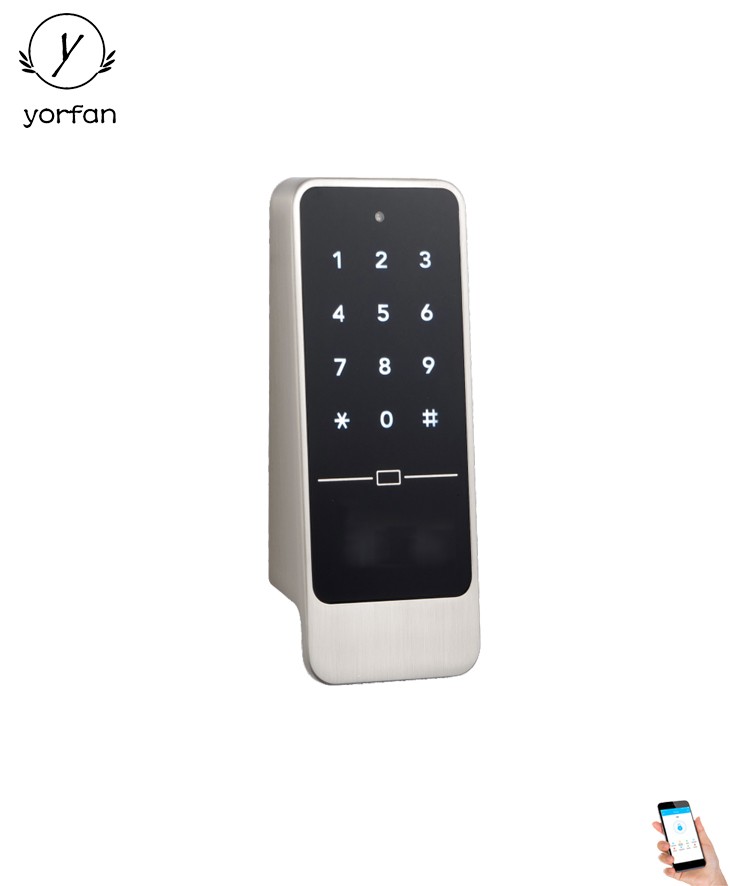
To illustrate the robustness of the final functionality checks, let us consider a typical Bluetooth cabinet lock produced by Yorfan Technology. This lock is designed for use in offices, schools, and gyms, where users need secure storage for their valuables. The lock supports fingerprint, password, and Bluetooth app unlocking, and is powered by a 4x AAA battery pack.
Upon entering the final functionality check station, the cabinet lock is first subjected to a visual inspection. The technician verifies that the stainless steel faceplate is polished to a mirror finish and that the capacitive fingerprint sensor is flawlessly integrated. The lock's mechanical components are then tested for smooth operation, with a slight detent ensuring positive tactile feedback.
In the wireless connectivity test, the lock is paired with a test smartphone. The technician walks to varying distances while sending unlock commands to measure the Bluetooth range. The lock consistently responds at up to 12 meters, well above the minimum requirement. The connection stability is tested by transmitting 100 rapid commands without any dropouts, demonstrating the lock's reliability.
The authentication validation test involves registering a test fingerprint and a password. The technician then attempts to unlock using each method. The fingerprint recognition is near instantaneous, unlocking the lock in under 0.5 seconds. The password entry is also quick, with the keypad lighting up upon touch. The app remote unlocking via Bluetooth is tested from within the same room, and the lock responds reliably.
For security, the factory simulates an attack by using a bypass device that attempts to replay the Bluetooth signals. The lock’s encryption prevents the replay, and the lock remains locked. The anti-pry mechanism is tested by placing a crowbar between the lock and the door frame; the lock emits a loud alarm, deterring the intruder. The wrong entry limit is also validated: after five incorrect fingerprint attempts, the lock locks down for 60 seconds.
Battery life is checked by measuring the standby current, which is only 35 microamps. Simulated usage patterns show that the lock can operate for over 12 months on a single set of batteries, assuming 10 unlocks per day. The low battery warning is triggered when the voltage drops to 4.8V, and the lock emits a beeping sound and sends an app notification. The emergency power port is also tested, allowing the lock to be powered via a USB cable for an immediate unlock.
Throughout the environmental stress tests, the lock operates flawlessly in temperatures from -20°C to 60°C and after being exposed to 90% humidity. The dust test shows that the keypad remains functional even when coated with a fine layer of dust. After all these tests, the lock is passed, packaged, and shipped. This case study exemplifies the level of attention that every Yorfan Technology Bluetooth lock receives.
Continuous Improvement and Future Advancements
As technology evolves, so do the testing procedures at Yorfan Technology. The factory constantly monitors emerging security threats and incorporates new test methods to address them. For instance, with the rise of sophisticated relay attacks, the factory has developed a dedicated relay attack simulator that can test the lock's resistance to this specific threat. The simulator uses two software-defined radios to capture and retransmit the Bluetooth signals, creating a virtual delay. The lock must reject the delayed signal, proving that it is immune to relay attacks.
The factory is also exploring the use of machine learning algorithms to analyze test data. By training models on historical pass/fail records, the system can predict potential failures before they occur. This predictive maintenance approach allows the factory to adjust production parameters in real-time, minimizing waste and maximizing yield. Yorfan Technology's commitment to cost-effective solutions and customization is supported by these technological advancements.
In response to the growing demand for connected home devices, the factory is expanding its testing capabilities to include wider interoperability. A dedicated smart home lab tests the lock's compatibility with major home automation platforms such as Amazon Alexa, Google Assistant, and Apple HomeKit. The lock must respond correctly to voice commands and integrate seamlessly with other smart devices. This forward-thinking approach ensures that Yorfan Technology remains at the forefront of the industry.
Quality Certifications and International Standards
Yorfan Technology's final functionality checks are aligned with international standards and certifications. The factory operates under an ISO 9001 quality management system, which ensures that every process, from design to delivery, is documented and controlled. The test procedures are written in accordance with industry best practices, and the factory regularly undergoes external audits to maintain its certification.
For security-sensitive products, the factory also adheres to standards such as the CE (Conformité Européene) and FCC (Federal Communications Commission) directives. These certifications require the lock to pass specific electromagnetic compatibility (EMC) and radio frequency (RF) tests. The factory's anechoic chamber is equipped to perform these tests in-house, reducing reliance on external laboratories and accelerating time-to-market.
The lock's cybersecurity features are validated according to the OWASP IoT Security Guidelines and the UL 2900-2-2 standard for network-connectable products. This involves penetration testing and vulnerability assessments. While not every Bluetooth lock may require this level of security, Yorfan Technology ensures that its higher-end models meet these stringent criteria, catering to commercial security applications.
Customer Feedback and Post-Market Surveillance
The final functionality check is not the end of Quality Assurance at Yorfan Technology. The company actively collects feedback from customers and distributors to identify any issues that may arise after the lock is deployed in the field. This post-market surveillance is vital for continuous improvement. Incoming customer support tickets are analyzed, and if a particular failure pattern emerges, the factory investigates and updates its test procedures accordingly.
For instance, if customers report that a lock's fingerprint recognition becomes unreliable after several months of use, the factory might enhance its aging test to simulate 2 years of usage. This ensures that the issue is caught during production. The factory also maintains a channel for distributors to report batch-level issues, allowing for quick corrective actions. Yorfan Technology's complete after-sales system and fast response are integral to this process.
The company's commitment to user-oriented concepts is also reflected in its design improvements. The factory works closely with end-users to understand pain points, such as complex installation processes. This is why many of its locks are designed for easy installation with no complicated wiring, as highlighted in the product's features. The final functionality checks include a thorough test of the installation process to ensure that a layperson can install the lock without difficulty. This includes providing clear instructions and ensuring that all mounting hardware is included.
Conclusion
In summary, the implementation of final functionality checks at a Bluetooth lock factory such as Yorfan Technology is a complex, multi-faceted endeavor that requires a delicate balance of automated precision and human expertise. Each station—from physical endurance to digital security—plays a vital role in guaranteeing that the lock performs exactly as intended, protecting what matters most. Yorfan Technology's unwavering commitment to excellence is evident in every aspect of its operation, from its wide range of products to its innovative testing methodologies. By adhering to high-quality standards and a user-oriented philosophy, the factory ensures that every Bluetooth lock it produces is not just a product, but a promise of safety and convenience. As the industry evolves, so too will these checks, but one thing remains constant: the pursuit of perfection.
For global users, this means peace of mind. Whether it's a locker lock in a gym, a cabinet lock in an office, or a hotel lock ensuring guest security, the final functionality checks at Yorfan Technology are the silent guardians that make modern smart living possible. The factory's dedication to integrating innovative technology with home and commercial security is exemplified in the rigor of its testing. With advanced anti-theft technology, stable smart connection, and minimalist design, these locks are prepared to meet the evolving needs of safe living and efficient management. And with professional after-sales support and customization services, Yorfan Technology is not just a manufacturer but a trusted partner in security.
The next time you use a Bluetooth lock, take a moment to appreciate the journey it took to reach your door. It passed through the hands of dedicated technicians, underwent countless automated tests, and was validated against the most stringent standards. It is the fruit of a factory that refuses to compromise on quality. Yorfan Technology Co., Ltd, with its commitment to delivering reliable smart security solutions, has indeed built a safer, smarter living experience for every user. The final functionality check is the last hurdle in that journey, and it is a hurdle that every product leaps with abundant confidence.